My name is Karelle Guay, and I have been studying Social Sciences for 5 semesters at Montmorency College. My glossary will be for anyone who is interested in Psychology and who wants to learn more about its terminology. I think my glossary will be helpful for people studying Psychology because there are so many words that students need to learn in this program. Also, I think that it would be helpful for people who aren't necessarily studying Psychology. Indeed, having basic knowledge about this topic is very important because a lot of people are dealing with mental health problem, but they don't know because as a society, we don't address it enough.
anxiety
noun
A feeling of worry, nervousness, or unease, typically about an imminent event or something with an uncertain outcome.
Example: I will evaluate my feelings of anxiety brought on by the overwhelming number of tasks I must carry out as a nurse caring for a group of patients.
en: anxiété
assimilation
noun
Assimilation is the cognitive process of making new information fit in with your existing understanding of the world.
Example: Through assimilation, we take in new information or experiences and incorporate them into our existing ideas.
en: assimilation
behaviorism
noun
The theory that human and animal behavior can be explained in terms of conditioning, without appeal to thoughts or feelings, and that psychological disorders are best treated by altering behavior patterns.
Example: A common example of behaviorism is positive reinforcement.
en: béhaviorisme
bipolar disorder
noun
Mental disorder that causes unusual shifts in mood, energy, activity levels, concentration, and the ability to carry out day-to-day tasks.
Example: We all have our ups and downs, but with bipolar disorder, these peaks and valleys are more severe.
en: trouble bipolaire
classical conditioning
noun
A learning process that occurs when two stimuli are repeatedly paired: a response which is at first elicited by the second stimulus is eventually elicited by the first stimulus alone.
Example: It is a type of therapy that combines classical conditioning and operant conditioning.
en: conditionnement classique
clinical psychologist
noun
A mental health professional with highly specialized training in the diagnosis and psychological treatment of mental illness.
Example: Clinical psychologists focus on people with more serious mental health issues.
en: psychologue clinicien
code switching
noun
Not only does code-switching mean to modify your speech to adapt to sociocultural norms, it now commonly means to change your behavior to suit the setting and circumstances.
Example: People who engage in code switching typically recognize that they get a benefit from this ability.
en: code-switching
cognition
noun
Cognition is a term referring to the mental processes involved in gaining knowledge and comprehension.
Example: Cognitive psychology is the field of psychology that investigates how people think and the processes involved in cognition.
en: cognition
dissociative disorder
noun
Involve problems with memory, identity, emotion, perception, behavior and sense of self.
Example: Dissociative disorders are mental disorders that affect a lot of people.
en: trouble dissociatif
ethnocentrism
noun
Evaluation of other cultures according to preconceptions originating in the standards and customs of one's own culture.
Example: Part of ethnocentrism is the belief that one's own race, ethnic or cultural group is the most important or that some or all aspects of its culture are superior to those of other groups.
en: ethnocentrisme
flooding
noun
Flooding is a form of behavior therapy used to treat people with fears or phobias.
Example: The underlying theory behind flooding is that a phobia is a learned fear, and needs to be unlearned by exposure to the thing that you fear.
en: immersion
hypermnesia
noun
Unusual power or enhancement of memory, typically under abnormal conditions such as trauma, hypnosis, or narcosis.
Example: Hypermnesia usually occurs when information is repeatedly tested in close succession.
en: hypermnésie
neurosis
noun
A class of functional mental disorders involving distress but neither delusions nor hallucinations, whereby behavior is not outside socially acceptable norms.
Example: Freud believed that in order to treat Wolf-Man's neurosis, Wolf-Man would have to bring repressed memories from his past into his conscious and accept the underlying meanings of his anxiety dream.
en: névrose
obsessive-compulsive disorder
noun
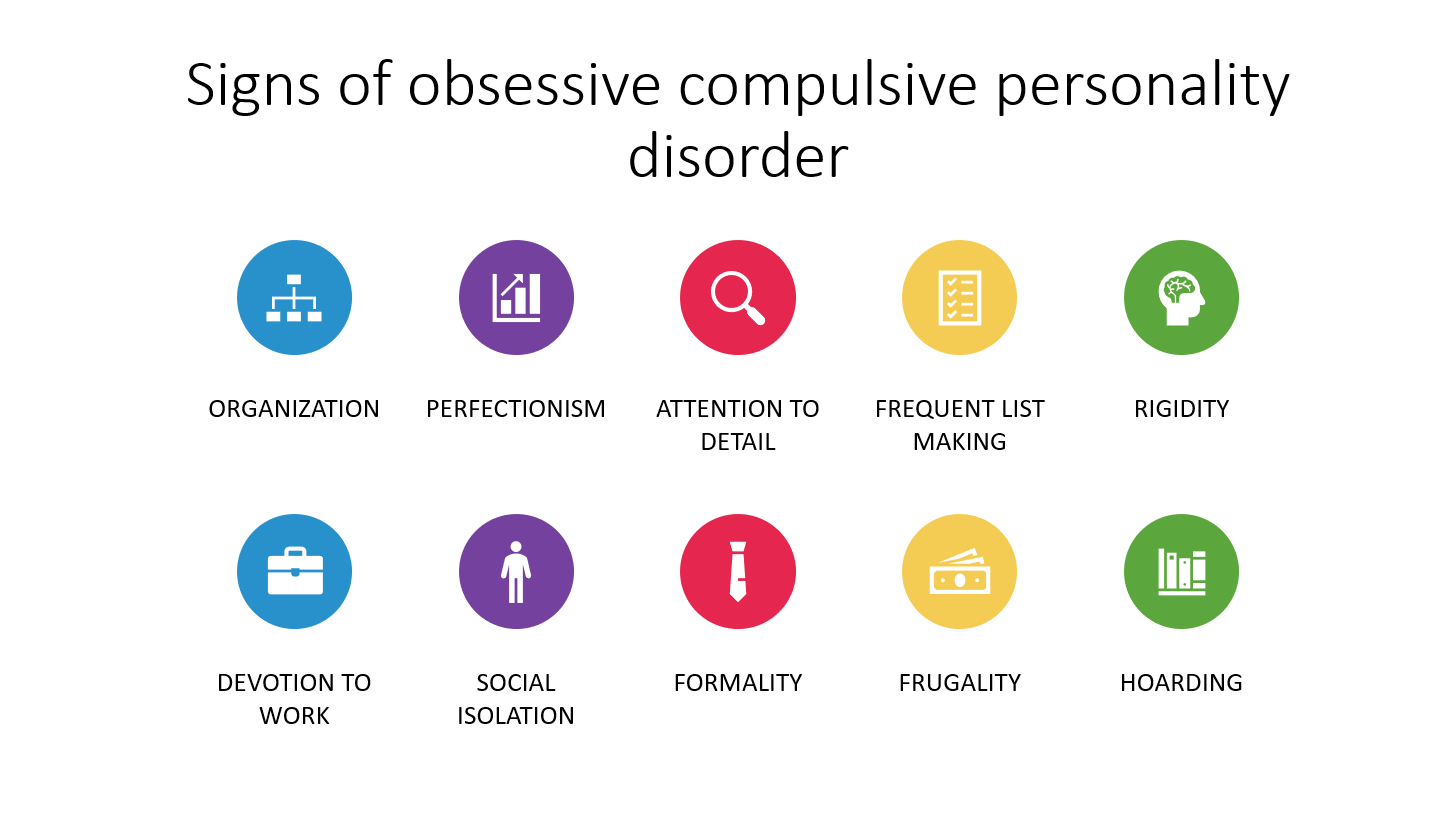
Common, chronic, and long-lasting disorder in which a person has uncontrollable, reoccurring thoughts (obsessions) and/or behaviors (compulsions) that he or she feels the urge to repeat over and over.
Example: Obsessive-compulsive disorder is a mental health disorder.
en: trouble obsessionnel-compulsif
prosopagnosia
noun
A neurological condition characterized by the inability to recognize the faces of familiar people.
Example: For some people, recognizing faces is an impossibility due the neurological disorder known as prosopagnosia.
en: prosopagnosie
psychoanalysis
noun
A method of studying the mind and treating mental and emotional disorders based on investigating the role of the unconscious mind.
Example: Psychoanalysis was developed in the late nineteenth century both as a theory and a form of therapy.
en: psychanalyse
psychosis
noun
A severe mental disorder in which thought and emotions are so impaired that contact is lost with external reality.
Example: Psychosis is an abnormal condition of the mind.
en: psychose
schizophrenia
noun
A long-term mental disorder of a type involving a breakdown in the relation between thought, emotion, and behavior, leading to faulty perception, inappropriate actions and feelings, withdrawal from reality and personal relationships into fantasy and delusion, and a sense of mental fragmentation.
Example: Schizophrenia causes psychosis and is associated with considerable disability.
en: schyzophrénie
social constructs
noun
An idea that has been created and accepted by the people in a society.
Example: Another example of a social construct that has changed over time is the concept of gender.
en: construction sociale
unconscious mind
noun
The part of the mind wherein psychic activity takes place of which the person in unaware.
Example: The unconscious mind is where memories and experiences that are not accessible to the conscious mind are stored.